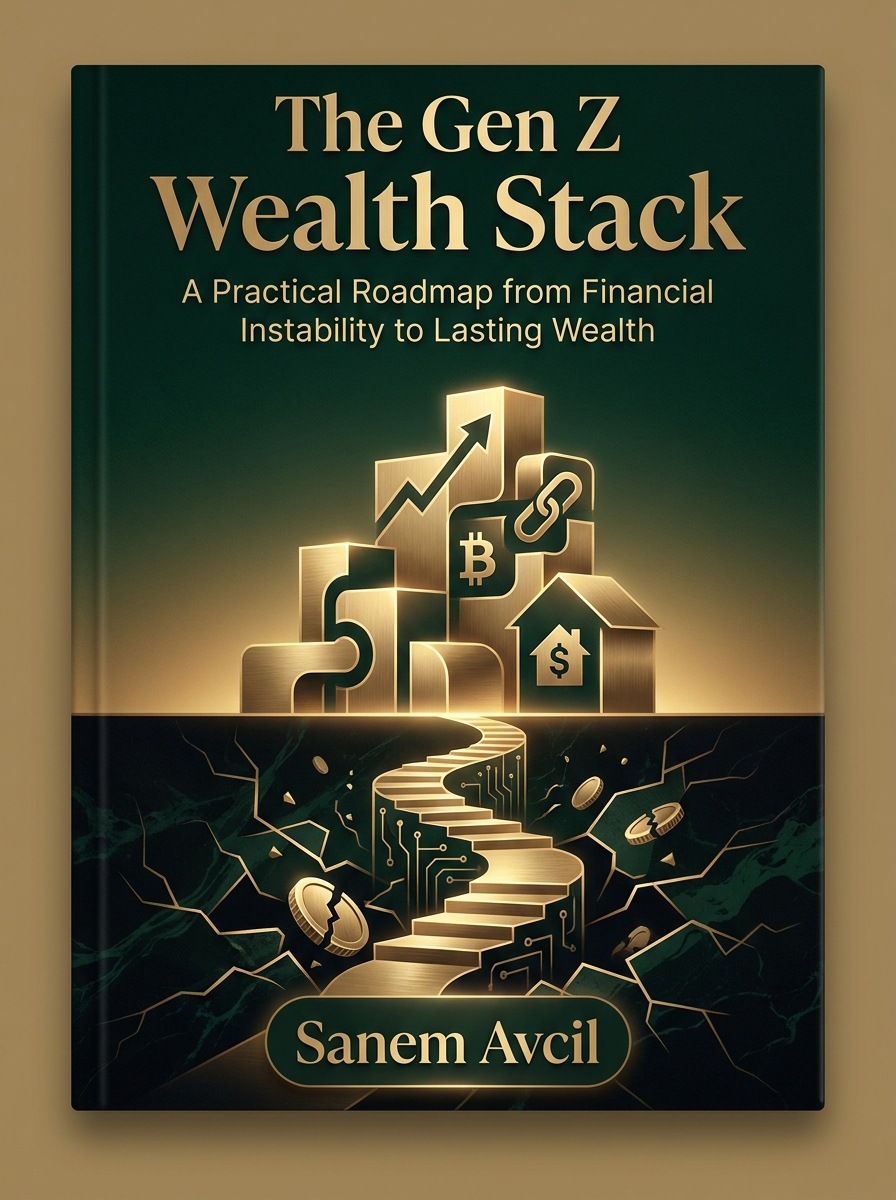
Most people encounter money as a series of urgent moments: a rent payment due before payday, a credit-card balance that keeps returning, an investment account rising and falling with the news, or a promising business idea that never becomes consistent income. Because these experiences feel disconnected, it is easy to search for one dramatic solution. You may wonder whether the answer is cryptocurrency, a side hustle, real estate, a higher-paying job, or the next stock that everyone online seems to be discussing. The wealth stack begins with a more useful premise: lasting wealth is not one move but a sequence of layers that make the next layer safer and more powerful.
The first layer is stability. Stability means knowing what comes in, what goes out, and how much flexibility exists between the two. It includes a workable spending plan, control over high-interest debt, reliable banking, and enough cash to absorb ordinary surprises without immediately borrowing. This layer may appear unglamorous beside conversations about artificial intelligence startups or Bitcoin, but it is the platform that prevents every unexpected expense from becoming a financial emergency. Without stability, even a profitable investment can be forced into a bad sale at exactly the wrong time.
The second layer is protection. Protection includes an emergency reserve, appropriate insurance, secure accounts, strong passwords, and a basic understanding of taxes and legal obligations. Its purpose is not to make you fearful; it is to keep one setback from destroying years of progress. A broken laptop, medical bill, job loss, or fraudulent transaction can be financially survivable when protection exists and devastating when it does not. The third layer, growth, is where you deliberately increase your earning power and invest in diversified assets over time.
Above growth sits ownership. Ownership means holding assets that can appreciate or produce value without requiring every dollar to come directly from your next hour of labor. That might include broad-market funds, a business, intellectual property, equity compensation, property, or carefully researched digital assets. The final layer is legacy: the people, causes, systems, and opportunities your wealth can support after your immediate needs are covered. You do not build these layers once and walk away; you strengthen them repeatedly as your income, responsibilities, and ambitions change.
The wealth stack challenges the fantasy that financial progress should look dramatic. Online, you often see the outcome without the structure beneath it: a screenshot of a trading gain, a founder celebrating a sale, or a creator describing a revenue milestone. What remains invisible are the years of skill development, failed experiments, savings, taxes, support systems, and favorable conditions that may have preceded that result. Chasing the visible outcome while ignoring the hidden foundation is how people confuse possibility with probability.
Probability asks a different question from excitement. Instead of asking, “How much could this make?” ask, “What are the realistic outcomes, how likely is each one, and what happens if I am wrong?” A speculative investment with a small chance of extraordinary success may be acceptable as a limited part of a strong financial plan, but it is dangerous as a substitute for rent money, emergency savings, or retirement contributions. Your time horizon matters as well: money needed next month cannot be treated like money intended for a twenty-year goal.
This is why a repeatable system usually outperforms a dramatic decision. Automating savings after payday, reviewing expenses monthly, investing consistently, increasing valuable skills, and directing part of each raise toward assets create progress that does not depend on perfect motivation. The system may feel slow during the first year, especially when the account balance is modest and the sacrifices are immediate. Yet its quiet repetition is precisely what gives it power.
Consider a situation you may recognize: you receive an unexpected bonus and feel pressure to prove that you are finally getting ahead. You could spend it all, place it on one volatile asset, or use it to reinforce the stack by paying down expensive debt, adding to reserves, investing, and funding a skill that could raise future income. None of these choices guarantees success, but the last approach improves your position across several possible futures. Wealth is not the ability to predict one outcome perfectly; it is the ability to remain in the game through many outcomes.
Compounding is commonly introduced as an investment formula: returns generate returns, and time magnifies the result. That explanation is correct but incomplete. In your life, money compounds alongside skills, reputation, relationships, health, and decision-making ability. A modest improvement repeated for years can become more valuable than a burst of effort followed by neglect.
Suppose you spend a year learning to sell, analyze data, write clearly, code, design, negotiate, or manage projects. The immediate financial return may be uncertain. But once a skill becomes reliable, it can improve your applications, freelance work, business opportunities, and ability to recognize quality in other people’s offers. The income from that skill can then fund investments, reduce financial pressure, and give you more freedom to pursue higher-value work. One capability becomes a productive asset that keeps opening doors.