
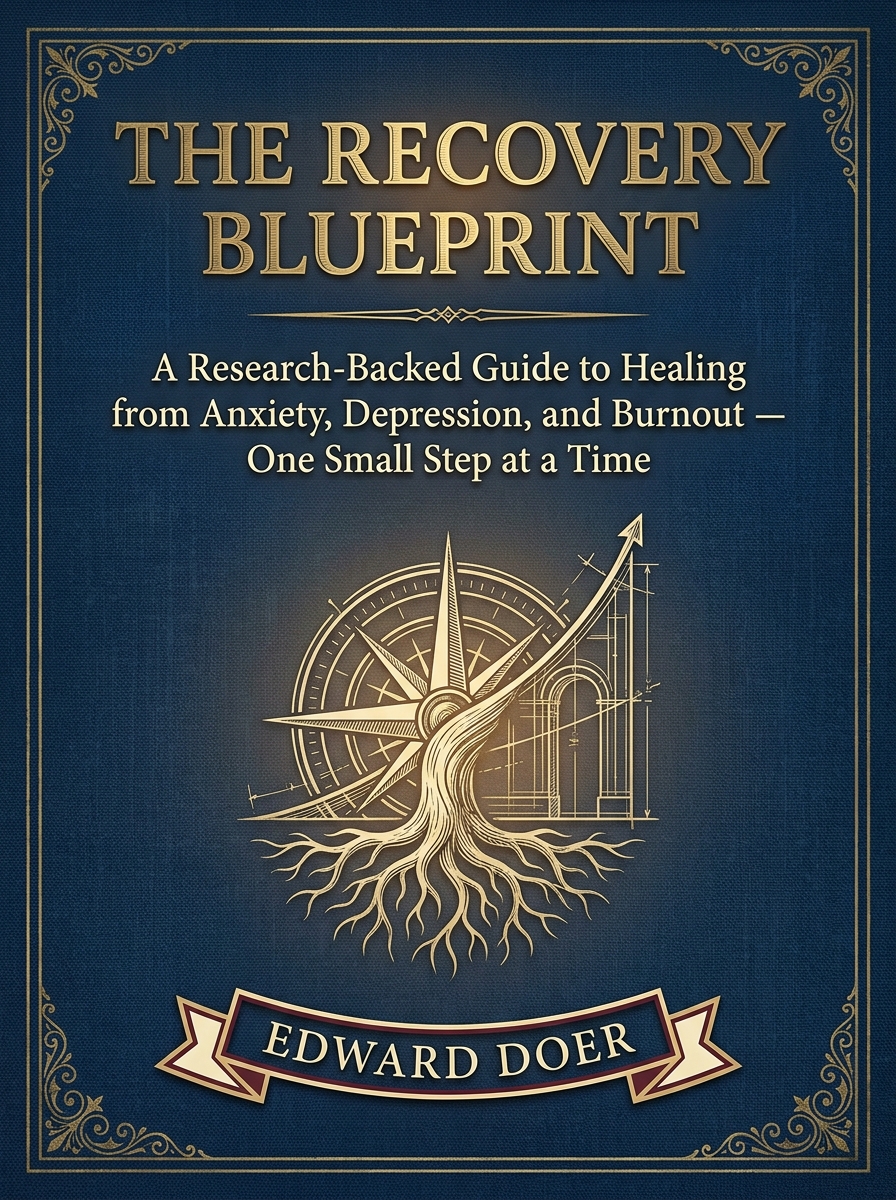
Cover of The Recovery Blueprint

The Recovery Blueprint

by EDWARD DOER

When anxiety, depression, or burnout takes over, even simple tasks can feel impossible. The Recovery Blueprint turns evidence-based mental health research into practical steps you can use today—without demanding perfection, endless motivation, or a complete life overhaul. Across twelve supportive chapters, you will learn how to understand your symptoms, calm an overloaded nervous system, rebuild daily structure, challenge unhelpful thinking, restore energy, improve sleep, reconnect with others, and make progress when motivation is low. Grounded in principles from cognitive behavioral therapy, behavioral activation, mindfulness, stress science, self-compassion, and habit formation, this guide explains not only what to do, but why it works. Each chapter includes manageable exercises, reflection prompts, troubleshooting strategies, and “minimum viable” actions for difficult days. You will also learn how to seek professional help, prepare for treatment, prevent relapse, and respond safely when symptoms become overwhelming. Whether you are taking your first step toward recovery or trying to regain momentum, this book offers a compassionate, flexible roadmap for moving forward—one realistic action at a time.

Read a free preview ↓
129 pagesPaperback · Ebook (PDF)6"×9" paperbackBlack-and-white interior+ $9.99 shipping · ships to US onlyen
$19.99+ $9.99 shipping
  • Printed on demand and shipped in 7–21 business days — US addresses only
  • Secure checkout by Stripe
  • Created with AI by an independent author — sold by Gamibooks

Read a free preview

Start Where You Are: Understanding the Recovery Process

If you are reading this while exhausted, frightened, numb, or unable to think clearly, begin with this fact: you do not need to become a different person before recovery can begin. You do not need perfect motivation, a complete explanation, or a five-year plan. Recovery starts with an honest understanding of where you are now, followed by one manageable action that supports your next step.

Anxiety, depression, chronic stress, and burnout can make ordinary life feel strangely difficult. Answering a message may require an hour of mental preparation. Choosing what to eat may feel impossible. A task you once completed automatically can suddenly seem like a wall several stories high. These experiences are not evidence that you are lazy, weak, dramatic, or permanently damaged. They are signs that your mind and body may be operating under sustained strain.

The purpose of this chapter is not to give you a label from a page. Only a qualified professional can evaluate your symptoms and determine whether a mental-health condition is present. Instead, this chapter gives you a useful map: a way to distinguish overlapping patterns, observe what is happening without shame, set realistic expectations, and decide when additional support is important. You will not be asked to solve your entire life today. You will be invited to notice the next honest step.

Questions, refunds or a problem with an order: www.gamibooks.com/support — a human reads every message.